
The Italian luxury brand Stefano Ricci has succeeded in securing the opening of legal proceedings challenging businessman Anton Shukhnin’s registration of its trademark in Ukraine.
The editorial team at 368.media learned of this from the proceedings of the Pecherskyi District Court of Kyiv.
By an October ruling, the Pecherskyi District Court of Kyiv is considering civil case No. 757/28437/25-ц, brought by the Italian company STEFANO RICCI S.P.A. against the State Organization “Ukrainian National Office for Intellectual Property and Innovations” (UANIPIO) and Anton Shukhnin, owner of the Domino brand. The claimant seeks to have the Ukrainian trademark certificate for “STEFANO RICCI” declared invalid and to compel the relevant parties to take certain actions.
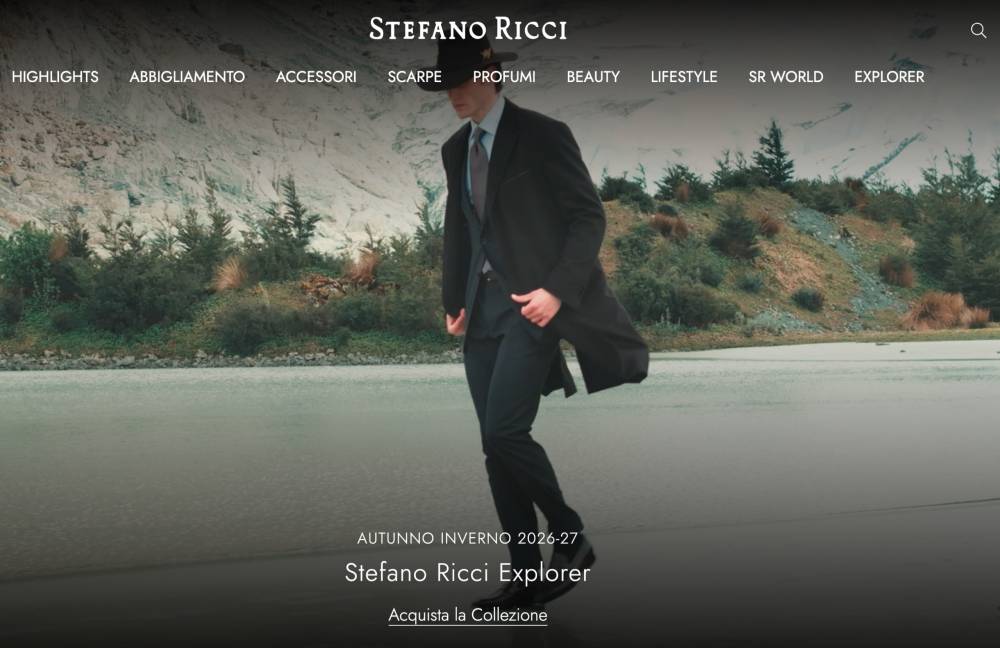
The Italian company STEFANO RICCI S.P.A. is a renowned Florentine luxury menswear, accessories and lifestyle brand founded in 1972 by designer Stefano Ricci. The company holds international registrations for the STEFANO RICCI trademark (including registration No. 767523), which extend to Ukraine.
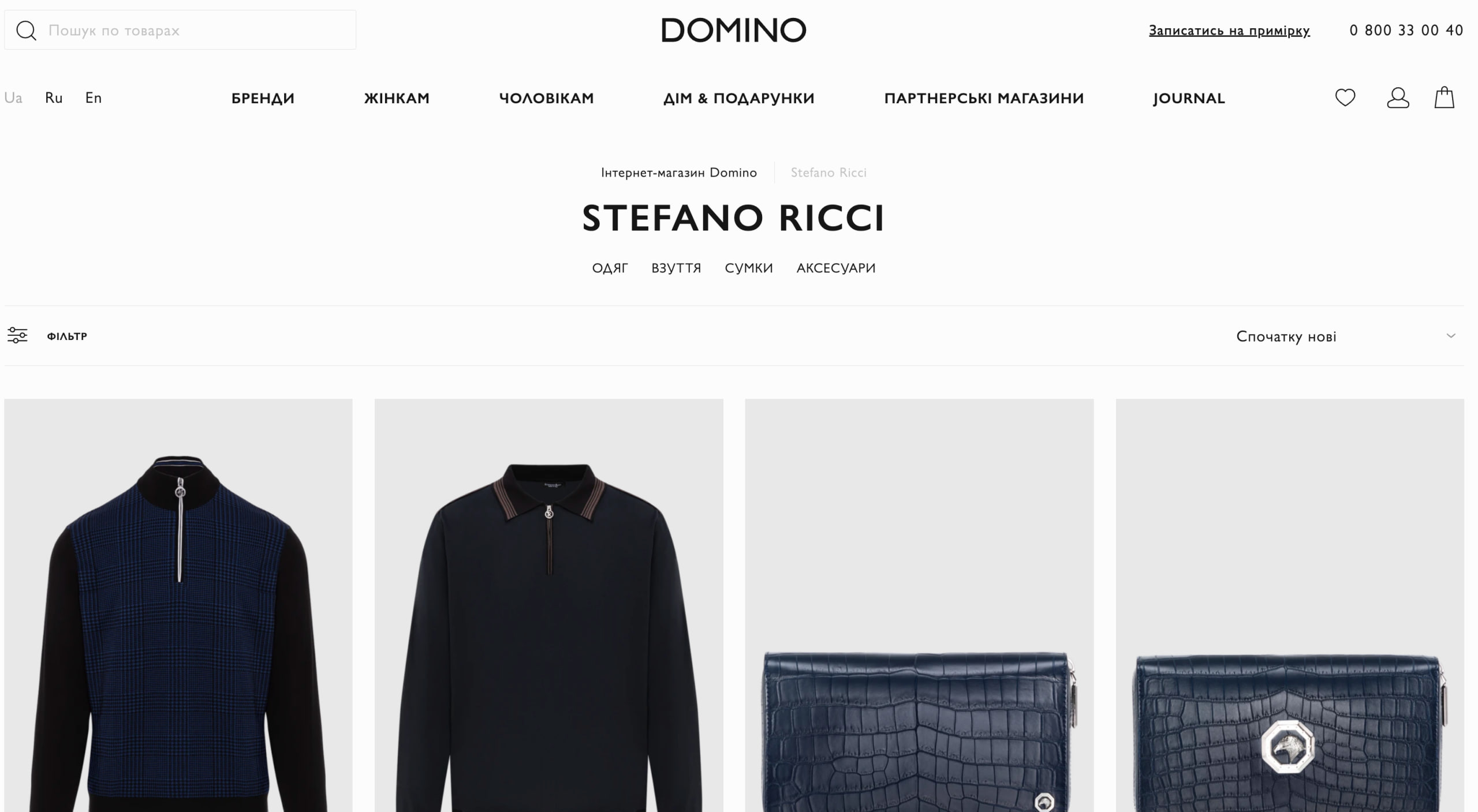
The dispute concerns Ukrainian trademark certificate No. 181419 for the STEFANO RICCI mark, registered in the name of Anton Serhiyovych Shukhnin. The Italian company argues that the Ukrainian trademark is identical or confusingly similar to its international registration to such an extent that it may mislead consumers as to the origin of the goods and services, as well as the identity of their manufacturer.
Image
Shukhnin is the owner of the Domino retail chain and has previously been involved in similar disputes. In particular, the Pecherskyi District Court had earlier declared his trademark registration for JACOB COHEN invalid. Media reports have characterized such registrations as attempts to “appropriate” other companies’ luxury brands, potentially enabling the registrant to control customs clearance of goods, block competitors’ shipments or demand licensing fees.
Judge Tetiana Hurtova is hearing the case under the rules of general civil proceedings. At the same time, it appears that Shukhnin is seeking by various means to complicate the proceedings themselves, exerting pressure on the judge.
The claim was originally filed in June 2025. Initially, the court refused to open proceedings, but in April 2026 the Kyiv Court of Appeal overturned that ruling and remitted the case to the court of first instance. Subsequently, the statement of claim was repeatedly left without further action due to formal deficiencies, including issues relating to payment of the court fee. After the claimant remedied all the deficiencies, the court opened proceedings.
The defendants in the case are UANIPIO, which maintains the Ukrainian trademark register, and the individual in whose name the disputed Ukrainian trademark certificate was issued.
The court has opened proceedings and set deadlines for the defendants to submit their statements of defence. The case concerns a classic conflict between the international owner of a well-known trademark and a national registration obtained by an individual. If the claim is upheld, the Ukrainian trademark certificate for STEFANO RICCI may be declared invalid.
Similar disputes involving luxury brands in Ukraine are not isolated cases. They raise questions about how effectively the intellectual property protection system safeguards the rights of foreign trademark owners against the registration of their marks by third parties.
In this material, the names “Domino” and STEFANO RICCI are used exclusively in a nominative (descriptive) sense — to identify the retail chain and online platform publicly associated with Anton Shukhnin, as well as to quote statements made by the entrepreneur himself and information published on the brand’s official website. Such use is necessary to ensure the accuracy and clarity of this journalistic article, is not intended for commercial promotion, does not create any impression of affiliation with or endorsement by the trademark owner, and complies with the principles of nominative fair use in the context of reporting on matters of public interest. The article does not infringe any exclusive trademark rights, as the marks are not used to identify the author’s own goods or services and their use does not harm the brand’s business reputation beyond the factual presentation of circumstances that can be verified through publicly accessible registers.